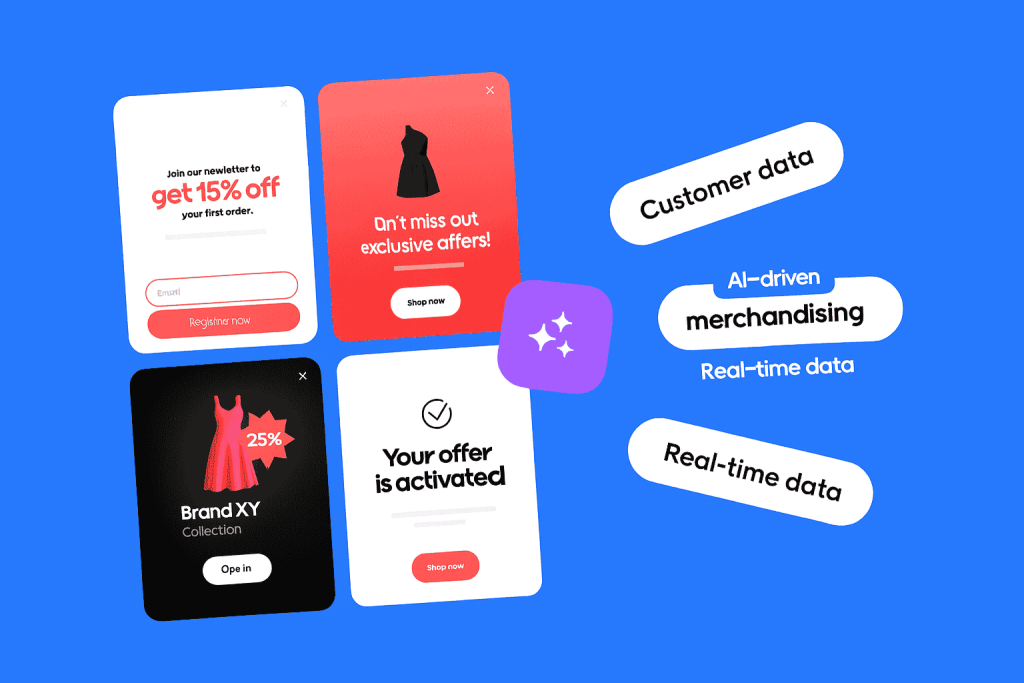
For years, many ecommerce sellers have equated “personalization” with simple features like “customers who bought X also bought Y,” or maybe using a customer’s name in emails. But as AI becomes more powerful and accessible, a new generation of agentic personalization engines is transforming how stores engage users: not with static rules, but with dynamic, generative, and adaptive shopping experiences tailored in real-time to each user’s behavior, context and intent. For example, platforms like Sell The Trend pair market‑level demand insights with AI‑driven merchandising, helping stores adapt product mixes and on‑site experiences in real time.
In this post: we explore what these modern personalization engines look like, why they matter, how they improve key metrics, and how even small or mid-sized ecommerce stores can begin to leverage them.
What is AI-driven personalization, and how is it different?
Traditional personalization in ecommerce is mostly “if-then” logic, built manually. For example: “If a user viewed a men’s T-shirt, show similar T-shirts.” Or “If it’s the user’s birthday month, apply a 10% discount.” This kind of personalization is fixed; it doesn’t learn or adapt.
In contrast, AI-powered personalization uses algorithms, often machine learning, to continually analyze customer data: browsing behavior, purchase history, time of day, even micro-behavioral signals (scrolling, time on page, repeated visits). Based on that data, AI dynamically tailors content: product recommendations, landing pages, bundles, layout, even copy and promotions.
Because it’s data-driven and adaptive, AI personalization delivers far more relevant, engaging, and timely shopping journeys.
Some modern AI-based personalization systems go even further: leveraging generative models to produce novel product bundles, dynamically rewriting homepage layouts, or adjusting content based on inferred user intent.
What agentic personalization looks like: features beyond “Also-bought”
Here are some concrete functionalities that “agentic” personalization engines bring to ecommerce, beyond the usual recommendation widgets:
- Autonomous landing-page creation: AI builds landing pages tailored to each visitor’s profile (e.g. first-time vs returning user, browsing history, location, device).
- Dynamic bundling & cross-sell combos: instead of pre-defined “frequently-bought-together,” AI assembles unique bundles per user, maximizing relevance and average order value.
- Homepage/layout adaptation per user intent: if AI infers a user is browsing casually, show promotional banners; if they seem ready to buy, show “popular items + fast shipping” layout.
- Real-time recommendation rewriting: as the user interacts (views products, adds to cart, abandons, revisits), recommendations update on the fly.
- Behavior-driven merchandising and offers: discounts, offers, or product promotions tailored to user behavior: e.g. showing a limited-time bundle if AI detects hesitation or prolonged browsing.
In essence: the store becomes a living, responsive “agent” that adapts itself to each visitor, not the visitor adapting to the store.
Why this matters: the business case for AI-powered personalization
Higher conversions, bigger baskets, stronger loyalty
- AI-personalized recommendations have been shown to increase click-through rates and sales across ecommerce platforms.
- Personalized experiences boost average order value (AOV) because customers are shown items or bundles they’re more likely to buy.
- Personalized shopping encourages repeat purchases and customer loyalty: when users feel understood, they’re more likely to return.
Better user experience: less friction, more relevance
- Customers no longer need to hunt through hundreds of products: AI surfaces what they are likely to want, based on data and behavior.
- Content (pages, layout, offers) matches user intent and context, leading to smoother, more intuitive shopping.
Competitive advantage & scalability
- As one recent 2026 survey found, many retailers using AI-driven personalization report positive ROI.
- Because AI works in real time and adapts continuously, the more traffic and data your store gets, the smarter the system becomes- allowing small and mid-sized stores to punch above their weight.
Implementation Reality: How stores today are using AI personalization
AI personalization is no longer reserved for tech giants. Thanks to modern SaaS tools and modular AI systems, even small-to-medium stores can begin using advanced personalization. Here’s how:
- AI-driven recommendation engines: Many ecommerce platforms and plugins now offer AI-powered “product recommendation” modules that learn from browsing and purchase behavior rather than rely on static rules.
- Behavioral analytics + dynamic content delivery: Tools that track in-session behavior (e.g. browsing sequences, cart activity, dwell time) and feed that data into personalization engines for dynamic content adjustment.
- Generative personalization: The latest systems combine recommendation engines with generative models to build custom bundles or landing pages tailored to user profiles (e.g. interest, past purchases, inferred needs).
AI-driven personalization is becoming the core “trust & personalization” theme in e-commerce AI research, showing how central it is to the future of online retail.
Challenges & What to Watch Out For
AI personalization offers huge promise but it’s not magic. Key challenges include:
- Data quality & volume: Personalization works best when you have enough behavioral data. Sparse or noisy data limits AI’s effectiveness.
- Privacy and ethics: Tracking user behavior raises privacy concerns. Many researchers warn about over-personalization, “algorithmic fatigue,” or perceived intrusiveness.
- Implementation complexity: Integrating AI engines, behavioral analytics, and dynamic content delivery requires solid architecture and ongoing tuning. Some stores may lack resources.
- Maintaining trust & transparency: If recommendations feel “too creepy” or incorrectly guessed, customers might react negatively. Building trust remains key.
The Future of Personalization: Autonomous, Adaptive, and Customer-Centric
We are rapidly moving toward a world where ecommerce stores are no longer static storefronts but living, adaptive agents that respond and evolve in real time to each visitor.
Emerging research points to more advanced personalization approaches:
- Generative recommendation systems (leveraging deep learning or large language models) that build personalized bundles, product suggestions or even dynamic content layouts.
- Context-aware experiences: leveraging session data, time, location, device, and inferred user intent to tailor user journeys.
- Continuous learning & adaptation: as more users engage, AI systems become better at predicting needs, reducing friction and increasing satisfaction.
For ecommerce businesses focused on long-term growth, this means personalization is not a “nice-to-have”, it will become table-stakes.
What Can You Do Today to Start Leveraging AI Personalization on Your Store
If you run an ecommerce store (small, medium or large), here’s a practical roadmap to begin embracing agentic personalization:
- Audit your data: ensure you collect meaningful behavioral data: browsing sessions, view history, cart activity, time on page, purchase history. AI personalization depends on quality data.
- Install an AI-powered recommendation or personalization engine: many modern platforms/plugins offer this out of the box. Even simple recommendation-based personalization delivers measurable gains.
Merchants can also explore AI-driven product discovery platforms that use real market data to reduce guesswork and accelerate go-to-market speed. Predictive tools such as Sell The Trend help sellers validate demand and automate execution- an increasingly important advantage as ecommerce becomes more adaptive and data-driven. - Enable dynamic content blocks or customization: allow parts of your homepage, category pages, or email marketing to adapt per user behavior or segment.
- Monitor metrics: conversions, AOV, retention, repeat purchases: track whether personalization leads to uplift; test variants (with vs without AI personalization) to measure impact.
- Scale gradually from recommendations to dynamic layouts and bundles: as you get more data, you can introduce more advanced, generative personalization features.
Personalization Is Evolving: Are You Keeping Up?
In 2026, personalization in ecommerce is no longer about manual rules or static “also-bought” widgets. It’s evolving into a living, agentic, data-driven system, one that learns, adapts, and personalizes each visitor’s journey in real time.
For ambitious merchants, especially small and mid-sized stores, embracing AI-powered personalization is no longer optional: it’s a necessity. By doing so, you don’t just improve conversions and average order value; you build better customer experiences, stronger loyalty, and long-term competitive advantage.