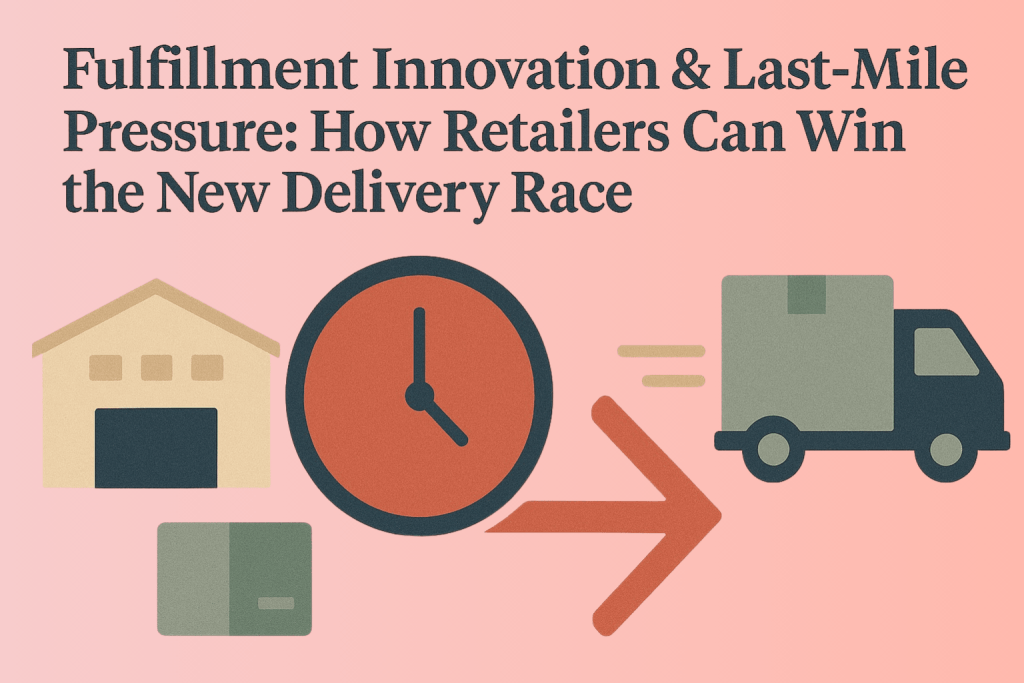
In today’s hyper-competitive eCommerce market, fast delivery expectations, cross-border demand, and rising return volumes are transforming how retailers approach fulfillment. Customers now expect same-day, next-day, or precisely tracked delivery, regardless of where they live. Meanwhile, global shoppers want access to international products without long delays — and they expect frictionless returns too.
This new reality is pushing brands toward regional micro-fulfillment centers, buy-online-pickup-in-store (BOPIS) models, and optimized return flows powered by real-time inventory accuracy.
Below is a strategic breakdown of the fulfillment innovations reshaping seller success — and the exact actions retailers must take.
The Rising Pressure of Last-Mile Delivery
Customer expectations around delivery have skyrocketed. According to McKinsey, over 90% of consumers consider 2-day delivery a baseline, with many expecting even faster options for urban areas.
But speed is only half of the equation — reliability matters just as much. Shoppers want:
• Accurate delivery promises
• Real-time tracking
• Convenient pickup alternatives
• Hassle-free return options
Retailers who fail to meet these expectations face higher cart abandonment and lower customer loyalty.
Regional Micro-Fulfillment: The Future of Fast Delivery
Large, centralized warehouses can no longer keep up with last-mile demands. As a result, brands are turning to micro-fulfillment centers (MFCs) — small, strategically located facilities closer to customers.
Why Micro-Fulfillment Works
✔ Reduces shipping zones (cutting cost & transit time)
✔ Enables same-day and next-day delivery
✔ Supports omnichannel fulfillment (store pickup, home delivery, ship-from-store)
✔ Lowers the strain on main distribution centers
Major retailers such as Walmart, Target, and Kroger have already invested heavily in MFC automation to meet holiday and peak-season demand.
For smaller eCommerce sellers, partnering with 3PLs offering regionalized fulfillment can deliver similar benefits without the infrastructure cost.
BOPIS & New Pickup Models Are Becoming Standard
Buy Online, Pick Up In Store (BOPIS) and curbside pickup exploded during the pandemic — but they’ve now become permanent customer expectations.
According to Shopify’s Future of Commerce Report, nearly half of shoppers prefer retailers who offer flexible pickup and delivery choices.
Why BOPIS Is Growing
• Saves shipping cost
• Eliminates delivery delays
• Drives in-store traffic (leading to upsells)
• Offers instant product access
• Reduces last-mile complexity
Even online-only sellers are entering pickup networks via:
• Locker pickup (UPS Access Point, Amazon Lockers)
• Carrier retail partners
• Local delivery hubs
Flexible fulfillment = higher conversion rates.
Smarter Return Flows: A New Competitive Advantage
Returns aren’t just a cost center — they’re now a differentiator.
Cross-border shoppers especially want clear, easy, inexpensive return options, or they won’t buy at all.
Innovations in Return Management
• Localized return centers to reduce shipping cost
• Returnless refunds for low-value SKUs
• Automated return authorizations
• Smart rules preventing costly cross-border reverse logistics
• Return drop-off networks (e.g., Happy Returns, UPS, InPost lockers)
A report from Forbes highlights that retailers with hassle-free returns see significantly higher repeat purchase rates.
Cross-Border Demand Is Redefining Fulfillment Strategy
Global eCommerce is booming. Shoppers in Europe, the Middle East, Southeast Asia, and Latin America want access to international brands — especially during holidays and flash-sale events.
But cross-border fulfillment comes with challenges:
• Long transit times
• Higher shipping costs
• Customs delays
• Complex return flows
• Localization expectations (currency, duties, multi-language support)
Retailers increasingly rely on:
• Regional fulfillment partners
• Distributed inventory models
• Cross-border duty-prepaid (DDP) shipping
• AI-powered demand forecasting for international orders
The goal is simple: global reach with local-feeling speed.
Critical Actions Sellers Must Take (Starting Now)
Below are the core operational moves retailers need to implement to stay competitive.
1. Highlight Delivery Promises at Browse & Checkout
Your delivery promise should be visible early and often, not hidden on the checkout page.
Where to Display Delivery Expectations
• Product page (“Get it by Tuesday”)
• Cart page
• Checkout flow
• Home page banners
• FAQ or shipping policy
Clear, accurate delivery information reduces cart abandonment by as much as 20% (source: Baymard Institute).
2. Offer Convenient Pickup & Return Options
Flexibility drives checkout conversions.
Must-Have Fulfillment Options
• Store pickup (BOPIS)
• Curbside pickup
• Locker pickup
• Drop-off return points
• Carrier-store returns
Customers who can choose how to receive or return their order are more likely to complete the purchase — and come back again.
3. Use Real-Time Inventory to Prevent Cancellations
One of the fastest ways to lose customer trust is a “Sorry, your item is out of stock” email.
To avoid this, real-time inventory synchronization is essential across:
• Marketplace listings
• Webstore
• Warehouse stock
• Store stock (for omnichannel sellers)
• 3PL inventory feeds
Out-of-sync inventory creates:
• Cancellations
• Overselling
• Delayed deliveries
• Negative reviews
• Account health issues on marketplaces
Tools like ERP integrations, WMS systems, or API-based real-time stock updates help ensure accuracy and reduce costly fulfillment errors.
The Strategic Takeaway
The future of eCommerce fulfillment is faster, more flexible, and more localized. With rising customer expectations and global competition, retailers must evolve beyond traditional warehouse models.
Winners in this new landscape will:
⭐ Use regional micro-fulfillment to achieve fast, reliable delivery
⭐ Provide multiple pickup and return options to improve convenience
⭐ Implement real-time inventory systems to reduce cancellations
⭐ Communicate clear delivery promises at every stage of the shopping journey
Fulfillment innovation is no longer an operational upgrade — it’s a growth strategy.