As the year-end festivities loom, social commerce is skyrocketing – and smart Amazon and Shopify sellers are taking notice. With over 5 billion people on social platforms and U.S. social commerce sales projected to hit nearly $79 billion in 2025, integrating social channels into your festive ecommerce strategy is a must. Younger shoppers lead the charge – for example, 40% of Gen Z plan to buy holiday gifts via social media (vs. 20% overall) – so reaching customers where they browse and click is critical this peak season.
Key Campaign Tactics for Holiday Social Commerce
Amazon and Shopify sellers can use several proven tactics to maximize holiday conversions:
- Influencer Partnerships: Collaborate with niche influencers whose audiences match your products. Micro-influencers (10K–100K followers) often drive higher engagement and authenticity than big celebrities. In fact, Shopify reports that 74% of consumers have bought a product because an influencer recommended it. Use platforms like Shopify Collabs or hashtag research to find the right creators. Leverage influencers in holiday campaigns (e.g. gift guides, “unboxing” videos, or live events) and consider offering them unique promo codes or affiliate deals. Sprout Social notes that shoppers are most likely to purchase when a brand or influencer shares a limited-time promo code – this creates urgency and trackable ROI.
- Platform-Tailored Content: Each social network favors different formats.
For Instagram & Facebook (Meta), post high-quality photos, Reels, and Stories with clear product tags. Take advantage of Instagram/Facebook Shops – set up in-app storefronts and tag products in your posts.
For TikTok, create short, entertaining videos using trending sounds and hashtags (#HolidayShopping, #TikTokMadeMeBuyIt, etc.). TikTok users are 1.5× more likely to purchase products they discover on the app, so include direct shopping links or use TikTok’s shopping features.
For Pinterest, build eye-catching holiday boards and Idea Pins (e.g. gift guides or holiday décor inspiration) and use rich Product Pins. Pinterest reports that 80% of weekly pinners discover new brands there, and its users spend twice as much per month on average compared to other networks. Adapt your messaging and visuals to each platform’s style to engage users effectively.
- Retargeting & Dynamic Ads: Use your social ads and Shopify tools to “follow” interested shoppers. Set up dynamic product ads on Facebook/Instagram and Google that automatically show users the exact items they viewed or added to cart. FoxEcom notes that dynamic retargeting can boost conversion rates up to 60% by reminding visitors of what they’re missing. Also deploy email and Messenger campaigns for cart abandoners. By segmenting audiences (past buyers, high-intent browsers, etc.), you can re-engage them with personalized ads, emails, or chats.
- Limited-Time Offers & Scarcity: Create holiday bundles, flash sales, or countdown deals to drive urgency. Limited-time promotions play on the FOMO effect – Sprout Social finds that holiday shoppers are especially motivated by influencer-driven promo codes and time-sensitive discounts. Highlight things like “24-hour sale” or “exclusive Black Friday bundle” in your ads and posts. Countdown stickers on Instagram Stories or live-stream reminders (e.g. “Live shopping in 1 hour!”) can spur quick buys. In short, run well-planned discounts and amplify them with FOMO to turn browsers into buyers.
Maximizing Conversions Across Instagram, TikTok, Facebook & Pinterest
Different platforms offer unique levers for conversion – use a multi-pronged approach without favoring one network too heavily. For example:
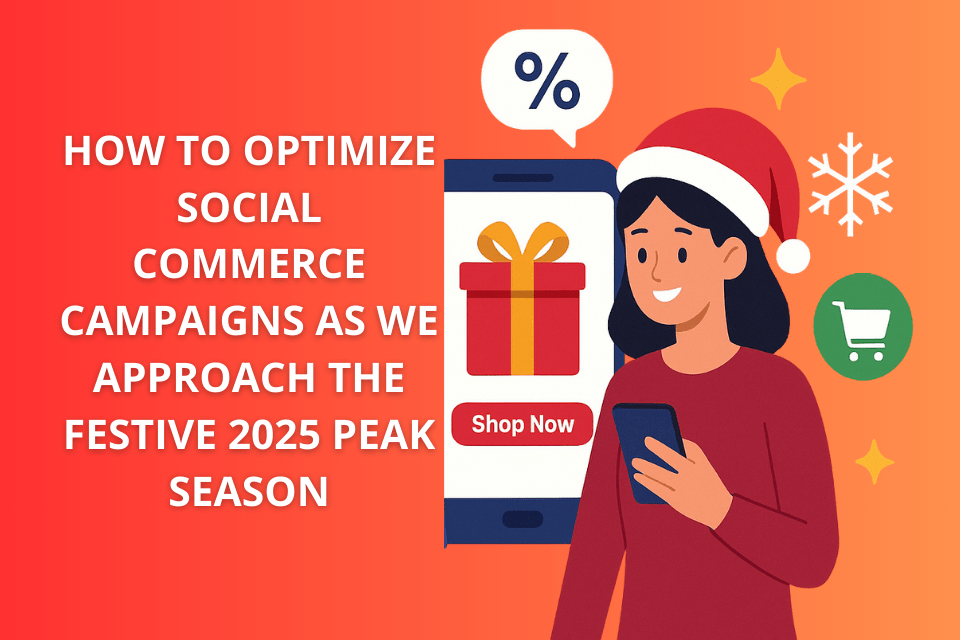
- Instagram & Facebook (Meta): Use shoppable posts (with product tags) and Carousel ads to showcase holiday collections. Enable in-app checkout (Shop Pay on Facebook/Instagram) for frictionless buying. You can even sell via Messenger or WhatsApp by using click-to-message ads to answer shopper queries. A festive ad (as shown below) with clear product images and a discount can grab attention in the feed.Example: A holiday-themed Instagram/Facebook ad with product images and a time-limited discount. Visuals and an engaging CTA (like “Shop Now – 50% off”) help grab holiday shoppers’ attention.
- TikTok: Embrace trends and creativity. Run short video ads and influencer “TikTok Shop” livestreams where viewers can purchase in real-time. Use TikTok’s self-serve ad tools to target holiday shoppers (try Spark Ads or In-Feed Video Ads) and tag products. Make sure to participate in trending challenges or hashtags (e.g. #GiftGuide2025). TikTok’s audience skews younger and highly engaged – House of Marketers notes that holiday shopping videos on TikTok spiked ~190% after Halloween. Show real people (influencers or customers) using your product – this native style tends to perform best on TikTok.
- Pinterest: Create holiday “gift guide” boards and Pin your products with keyword-rich descriptions (think “Christmas decor,” “holiday gift,” “Black Friday deals”). Pinterest ads now support interactive formats (e.g. Showcase Ads, Quiz Ads) for festive campaigns. Don’t forget the power of rich pins – they pull in pricing and availability automatically. Since half of Pinterest users discover new brands in the holidays and 79% say they plan to spend more than last year, pinning seasonal content can drive strong referral traffic.
- Facebook (Marketplace & Ads): In addition to organic posts, use Facebook’s highly granular ad targeting for holiday segments (parents, gift seekers, etc.). Create dynamic ads that sync with your catalog via Shopify. Facebook also allows carousel ads to tell a story (e.g. “Our top 5 gift picks”). Consider using Facebook Groups or Live selling events for community engagement. Remember that 62% of US social shoppers report their last purchase on Facebook, so a strong holiday presence here is crucial.
In all cases, craft content that’s festive (think holiday themes, gift imagery, cheerful copy) and platform-appropriate. Use high-quality visuals and concise captions or CTAs (like “Shop Now” or “Limited Time Offer”). Test variations (A/B tests for headlines, images, ad formats) to see what resonates.
The Power of User-Generated Content and Social Proof
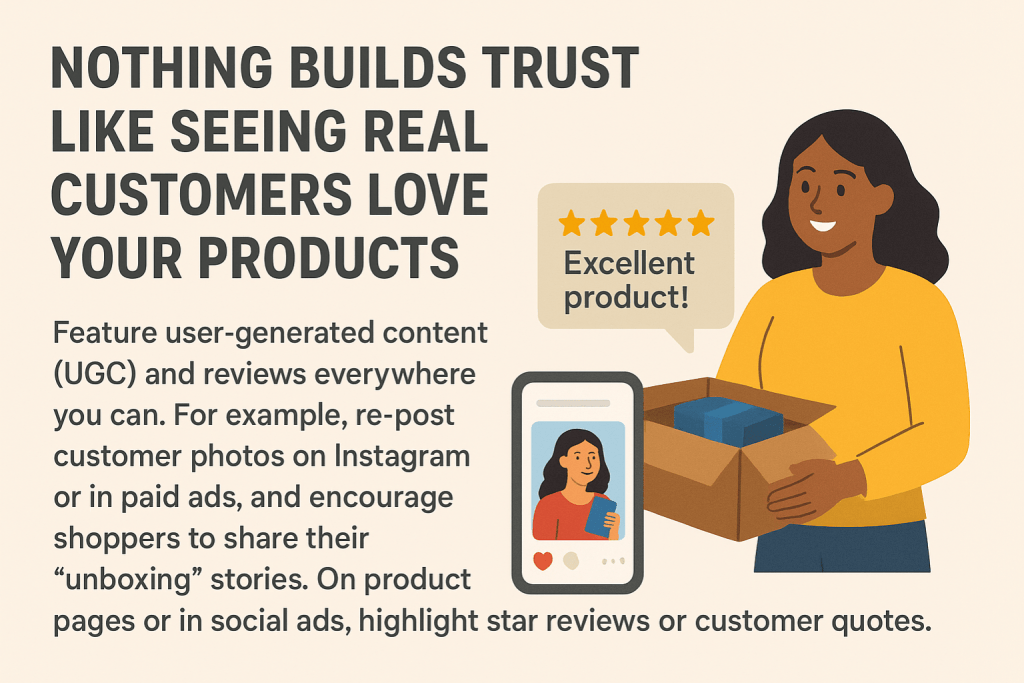
Nothing builds trust like seeing real customers love your products. Feature user-generated content (UGC) and reviews everywhere you can. For example, re-post customer photos on Instagram or in paid ads, and encourage shoppers to share their “unboxing” stories. On product pages or in social ads, highlight star reviews or customer quotes. Research shows 60% of consumers would even pay more for products with a positive social-media buzz (through UGC, influencer praise or viral posts). In fact, Sprout Social found that 78% of Gen Z and 70% of Millennials are willing to spend extra on items that have strong social endorsements.
Visual UGC is especially impactful: a survey found 87% of ecommerce brands now prefer using customer photos over stock images or models for their marketing, because shoppers find UGC more authentic. It also earns more trust: 33% of marketers said “real customer images” delivered the highest consumer trust (double the share of influencer content). To harness this, run a holiday hashtag contest or ask customers to tag you in festive photos. Then showcase the best entries on your social feeds and site. This social proof assures new buyers – remember, consumers are likely to be swayed by posts from regular users showcasing products in action. Even negative reviews can help by proving authenticity: one analysis found shoppers who read one-star reviews converted at a 71% higher rate than average (consumers trust honesty).
Also leverage community feedback – integrate a Q&A or discussion on product pages so prospective buyers see real conversations (PowerReviews reports huge conversion lifts from Q&A engagement). In short, make UGC and reviews a cornerstone of your holiday campaigns. They amplify every ad and post with built-in credibility.
Measuring ROI and Optimizing in Real Time
To maximize your holiday ad spend, track and adjust constantly. Start by defining clear KPIs: sales, cost per acquisition (CPA), return on ad spend (ROAS), or average order value. Tag all social campaigns with UTM codes and connect them to analytics. Use tools like Google Analytics and platform pixels to attribute sales back to each campaign. For example, Google Analytics lets you see which social channel and ads drive the most traffic and conversions, so you can double down on top performers. Shopify sellers can use the built‑in marketing reports or integrate Google & YouTube channels to monitor performance.
Meanwhile, Facebook Pixel (and similar tags on Instagram/TikTok) will report impressions, click-throughs, and exact conversion numbers. Check these analytics daily during the peak season. If an ad’s cost-per-conversion is too high, pause or tweak it. Conversely, scale up spending on ads with high ROAS. Use A/B testing: try different headlines, creatives, or audiences and let winners run. Regular analysis allows you to react in real time – for example, shifting budget to a platform that’s suddenly trending (maybe TikTok’s CPA is lowest, or Instagram sales spike after a Reel goes viral). As Shopify advises, continuous “analyze and adjust” is key: use analytics data to optimize targeting and messaging on the fly.
Calculate ROI simply as (Revenue – Ad Spend) / Ad Spend. A common benchmark in marketing is aiming for at least a 3:1 revenue-to-spend ratio (300% ROI), but your target will depend on margins. Above all, don’t just track clicks or likes – tie every campaign to actual sales or profit. This way you know which social tactics truly pay off during the holiday rush.
Takeaways for a Profitable Festive Season
Social commerce is no longer optional – it’s central to a winning holiday strategy. By partnering with the right influencers, tailoring creative to each platform, and using social proof to build trust, Amazon and Shopify sellers can ignite their peak-season sales. Remember to sprinkle in urgency with promo codes and flash deals, and always measure your results so you can reallocate budget to the highest-converting ads. With an agile, data-driven approach, you’ll meet shoppers where they are scrolling and turn festive engagement into record Amazon holiday sales and Shopify marketing ROI.